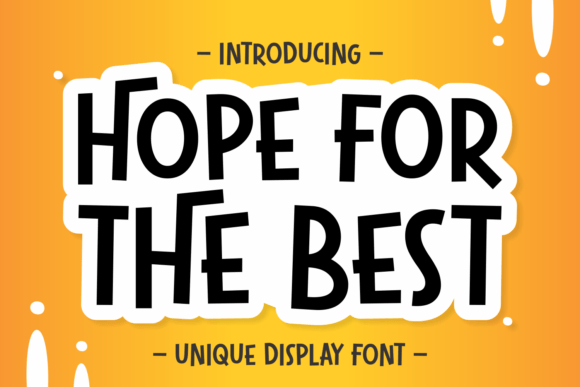
Hope for the Best: A Display Font That Elevates Small Business Branding
As a small business owner, I’ve learned that every detail matters when building a brand. From the colors we choose to the way our name appears on a product label, consistency and professionalism are key to being taken seriously. That’s why I was excited to discover Hope for the Best, a display font that blends the warmth of handwritten calligraphy with a clean, modern edge. It’s not just a pretty typeface—it’s a tool that helps my brand feel more cohesive, trustworthy, and memorable across everything I create.
What Makes Hope for the Best Stand Out?
Hope for the Best is a script-style display font that mimics the fluidity of real handwriting but with a polished, intentional design. Its bold strokes and elegant curves make it perfect for headlines, logos, and other visual elements where you want to grab attention without looking messy or unprofessional. It carries a sense of optimism and creativity, which makes it especially appealing for businesses in lifestyle, wellness, food, beauty, and artisanal product niches.
Unlike overly ornate fonts that can feel outdated or hard to read, Hope for the Best strikes a balance between expressive and legible. Whether it’s on a product label, a social media post, or a printed flyer, it maintains clarity and charm, even at smaller sizes. This makes it incredibly versatile for real-world business use.
How I Use Hope for the Best in My Branding
When I first started my small candle-making business, I struggled with making my packaging and marketing materials feel cohesive. I tried a few decorative fonts, but they either looked too casual or didn’t translate well across different mediums. Then I tried Hope for the Best—and everything clicked.
- Logo Design: I used it for my business name in my logo, giving it a warm, handmade feel without looking amateurish.
- Product Labels: The font’s clarity helped me create clean, elegant labels that customers could read easily, even on small jars.
- Social Media Graphics: It’s become my go-to for Instagram quotes and Pinterest pins, where visual impact is crucial for engagement.
- Packaging Design: I used it on thank-you cards and stickers included in shipments, reinforcing my brand voice and making the unboxing experience feel personal.
Why Font Choice Matters for Small Businesses
Fonts might seem like a minor detail, but they play a huge role in how your brand is perceived. A well-chosen typeface like Hope for the Best can help your business appear more professional, trustworthy, and aligned with your target audience.
For example, if you run a boutique or a wellness brand, using a modern script font can convey elegance and care in your design choices. If you’re an online seller of handmade goods, it adds personality without sacrificing readability. Even service-based businesses like coaches or consultants can use it to add a touch of warmth to their website banners or digital ads.
Real-World Uses for Hope for the Best
Here are some of the ways I’ve seen Hope for the Best work well in different business contexts:
- Café Menu: Used for drink names and specials, giving the menu a cozy, inviting look.
- Beauty Product Packaging: Perfect for brand names and taglines on skincare or perfume labels.
- Coaching Business: Great for course titles and promotional graphics that need to feel inspiring and approachable.
- Handmade Candle Brand: Works beautifully on labels, thank-you notes, and product tags.
- Online Shop Branding: Adds a personal touch to banners, email headers, and digital product covers.
Using Hope for the Best Effectively
Because it’s a display font, Hope for the Best works best in headlines, logos, and accent elements—not for long paragraphs or body text. Think of it as the visual anchor of your design. It draws the eye and sets the tone, while more neutral fonts handle the supporting text.
For example, I pair it with a clean sans serif like Montserrat or Open Sans for body copy on my website or packaging inserts. This contrast makes the design feel balanced and intentional. On social media, I use it in quotes or captions that need to stand out, while keeping the rest of the text simple and readable.
Readability in Real Business Settings
One thing I’ve learned the hard way is that not all beautiful fonts work well in every setting. I once used a script font that looked great on my laptop but was nearly unreadable on a printed sticker. That’s why I appreciate how Hope for the Best maintains its legibility across formats.
Whether it’s printed on a product label, viewed on a mobile screen, or used in a digital ad thumbnail, it holds up well. Its bold strokes prevent it from getting lost in small sizes, and the spacing between letters is just right—neither too tight nor too loose.
Testing Before Committing
Before fully integrating Hope for the Best into my brand, I tested it in a few different applications. I created sample labels, mock social media posts, and a test logo to see how it looked in real-world use. This helped me catch any issues early and ensured that the font worked for both digital and print materials.
I recommend doing the same before making any font a core part of your branding. Try it out in different sizes, colors, and backgrounds. See how it looks on both high-resolution screens and printed materials. It’s a small step that can save you from costly redesigns later.
Font Pairing Made Simple
Pairing Hope for the Best with the right supporting fonts is key to creating a polished brand look. Here are a few combinations that work well:
- Hope for the Best + Montserrat: A modern sans serif that balances the script’s elegance with clean readability.
- Hope for the Best + Lora: A serif font that adds a touch of sophistication, great for print materials.
- Hope for the Best + Roboto: A versatile sans serif that keeps the design feeling fresh and digital-friendly.
These pairings help create a visual hierarchy that guides the viewer’s eye and makes your materials feel more intentional and professional.
Check Licensing Before You Use It
One final tip: always check the commercial licensing for any font you plan to use in your business. Hope for the Best is a premium font, and while it’s worth the investment, it’s important to make sure you have the right to use it in your specific projects—especially if you’re selling physical products, offering digital downloads, or using it in client work.
Most font marketplaces provide clear licensing terms, so read them carefully. You want to avoid any legal issues down the line, especially as your business grows and your brand assets become more valuable.